| ||||||

Sabtu, 24 Maret 2018
Grappling with the grammar of the indefinite pronouns by Josse Carillo


How to avoid stumbling when using the English comparatives by Josse carillo
|
« on: March 19, 2017, 07:40:33 AM »
|
Who hasn’t stumbled grammatically when comparing things in English, like saying “Less professors than expected have applied for the vacancy in that once-reputable college of law” or “The public is now showing fewer tolerance for the arrogance of that fallen public official”? Usually, the speaker becomes conscious of the embarrassing error only a few seconds later, but the damage to his or her self-esteem is irreparable. For there’s really no way to justify why those simple comparatives weren’t said correctly off the cuff, the first as “Fewer professors than expected have applied for the vacancy in that once-reputable college of law,” and the second as “The public is now showing less tolerance for the arrogance of that fallen public official.”

 Sizing up and comparing things is one of humankind’s strongest instincts, so it’s really no surprise that every language evolves a well-defined grammar for comparatives. As we all should know by now, English does this in either of two ways: (a) by adding the suffix “-er” to the positive form of an adjective (or adverb), as in “deeper” for “deep,” or (b) by putting the modifiers “more” or “less” ahead of a polysyllabic adjective derived from a foreign language, as in “more expensive” and “less appetizing.”
To complete the comparative form, English places the subordinating conjunction “than” between the two elements being compared: “The condominium units here are more expensive than those situated in the commercial district.” “This restaurant’s cooking is more (less) appetizing than that of the restaurant in front.” In these comparative constructions, the first element is a clause that expresses the difference (as in “the condominium units here are more expensive”), and the second element is introduced by the subordinating conjunction “than” (“than those situated in the commercial district”).
Always keep in mind though that in two-clause sentences, the following two-part subordinating conjunctions are used instead of “than”: (a) “as/not as…as,” as in “Our Davao apartelles are as (not as) big as our Tagaytay apartelles”; (b) “not so/not as…as,” as in “Her second starring role is not so (not as) sensual as her first”; (c) “the same…as,” as in “The weight of his luggage was the same as that in his previous flight”; and (d) “less/more…than,” as in “Their wedding reception cost more (less) than they anticipated.”
Most English speakers quickly get adept at using these comparative forms, but as stated in the outset, the choice between using the comparatives “fewer” and “less” does present some conceptual difficulty. It requires clearly knowing beforehand whether the noun to be modified by them is countable or noncountable.
Something is countable, of course, when we can figure out without difficulty how many of it there are; we then use “number” as an indefinite measure for it, as in “the number of houses” and the “a number of guests.” On the other hand, something is noncountable if it’s in bulk form and counting its constituent units would be insufferably difficult or impossible; we then use “amount” as a measure for it, as in “the amount of water” and “a great amount of exertion.”
For plural count nouns, or things that use “number” as measure, the comparative “fewer” is used, as in “There are fewer viewers of her provocative blogs now than last week.” However, for singular mass nouns or things that use “amount” as measure, the comparative “less” is used, as in “Our truck fleet consumed less diesel fuel this week than last week.” We should also take note that when a plural count noun is thought of as an aggregate, “amount” is more appropriate than “number” as a measure for it, as in “You can ship to us any amount of Hawaiian pineapples you can produce.”
With this, we should be better off in avoiding stumbles when using comparatives from now on.
This essay, 1032nd in the series, first appeared in the weekly column “English Plain and Simple” by Jose A. Carillo in the Education Section of the March 16, 2017 issue (print edition only) of The Manila Times, © 2017 by the Manila Times Publishing Corp. All rights reserved.
Waltzing on the Web, By Josse Carillo
Waltzing on the Web
I'm feeling lighthearted and buoyant today, June 2, 2017, so once more I'm sharing with Forum members and my Facebook friends and fans this essay that I wrote way back in 2003 about the wonders of the then newly emergent World Wide Web.
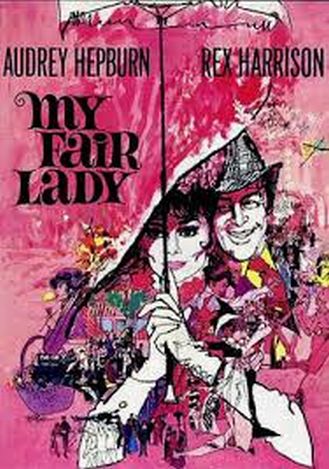
I don’t remember now if it was because the Cockney flower girl Eliza Doolittle had fallen in love with the English phonetics expert Professor Henry Higgins, or because she had miraculously acquired such exquisite English under his tutelage that she had convinced the crusty London upper class that she was a member of Hungarian royalty. But there she was ecstatically singing “I Could Have Danced All Night” in that magical bedroom scene of the 1964 movie production of the stage musical My Fair Lady, waltzing all by herself and wondering what brought her so much joy:
I could have danced all night, I could have danced all night
And still have begged for more. I could have spread my wings
And done a thousand things I’ve never done before.
I’ll never know what made it so exciting,
Why all at once my heart took flight…

For some reason, this was the image that came to mind when it dawned on me how wonderful and how indescribably powerful the World Wide Web is. That was seven years ago, when my four-year initiation with the personal computer and word processing finally led me to the joys of sending and receiving electronic mail on the Internet, and of entering its chat rooms to talk with friends and strangers in every imaginable place in the planet. I thought then that that was the ultimate high, making my personal presence felt not only in my immediate neighborhood but also anywhere where there was a soul with a computer and a fax modem. But I was wrong. I was soon to discover an even bigger high: that with my personal computer and the Web, the whole world and most everything that it had to offer were now literally at my fingertips.
Like most people, I began using the computer as simply a more elegant and more efficient typewriter. That was when it was no longer possible for me to defend the merits of my portable Underwood against those of its digital counterpart. From there I progressed to making my computer do simple math and spreadsheet accounting for my family business at the time. Every now and then, of course, I would enjoy and amuse myself with the many ingenious games and diversions that could be played with it. Then, with the advent of the fax modem and the Internet, the computer became my indispensable personal communication tool. Not long afterwards, through the Web, it became my veritable passport to the world, my key to the immense body of knowledge and information whose surface I had barely scratched even long after I was through with college.
The beauty of the Web is that you can both literally and figuratively waltz on it while you discover its many treasures. With the click of the mouse you can saunter into any of its millions of sites and discover many things you have not known or rediscover those you have already forgotten, such as what the weather or the price of diapers was when you made your inauspicious debut into this planet, what movie or song album was the rage when you had your first crush, and how much was the price of a bottle of Coke when regular gasoline was 25 centavos to the liter. You can trot from one website to another to find out how much it will cost you to rent a flat in Reykjavik at this very moment, hire a mountain guide in Nepal for an ascent to Mt. Everest, or lease a car in Rome for a land tour of Europe all the way to Moscow. And at any time of day, without leaving your computer desk, you can enter the U.S. Library of Congress and pore over its more than 12 million bibliographic records of books and periodicals, get glimpses of the Smithsonian Institution’s engaging bits of American natural history, or make a virtual tour of the fabulous art collections of the Louvre Museum in Paris.
The Web is especially a great boon to English learners in whatever exciting or exasperating stage of the language learning curve they find themselves right now. This is because English is the lingua franca of the Web, and the latter has everything the learner needs to know about English or anything written in English—from its many idioms and figures of speech to the peculiar conjugations of its irregular verbs, and from the secret feeding grounds of the aardvark to the doomed genetic path of the zebronkey. There are, moreover, hundreds of free English proficiency learning sites on the Web to help the learner perfect his English grammar and diction. And once through with your quest for better English, you can perhaps download the trial edition of the amazingly instructive Rosetta Stone to learn a new language or two from its selection of no less than 22 foreign languages, ranging from French to Japanese and from Polynesian to Norwegian.
I used to snicker at Microsoft’s slogan, “Where do you want to go today?”, as patronizing and pretentious, but now I know in my heart that it captures the fundamental truth about the Web. There truly is no limit to where you might want to roam and wander on it. My favorite Web search engine alone, Google, boasts of an accessible collection of 2,469,940,685 Web pages—almost 2.5 billion pages of knowledge and information, enough to fill hundreds of the biggest physical libraries on our planet! I have peeped every now and then at this hoard and I have discovered veritable gems, like the complete or substantive collections of the poetry and other works of the English poets John Donne, William Blake, and Dylan Thomas, the French poet Jacques Prevert, and the American poet Walt Whitman; the Perseus Project that had put together vast selections from the Greek literary classics; and entire Holy Bibles of every religious denomination.
All of my readings from grade school through college, in fact, would amount to only a tiny fraction of the readings that I have already done on the Web in the less than six years that I started mining it for its treasures. And I have been enjoying every minute of my freewheeling incursions into its pages, far better than when I had the likes of Professor Higgins telling me to my face to read my English textbook from cover to cover or else fail and repeat his English course. (2003)
This essay first appeared in the English-usage column “English Plain and Simple” by Jose A. Carillo in The Manila Times sometime in 2003, © 2003 by Manila Times Publishing. It subsequently appeared as Chapter 1 in Part IV, Section 1 of the author's book English Plain and Simple: No-Nonsense Ways to Learn Today's Global Language, © 2008 by Manila Times Publishing. All rights reserved.
I'm feeling lighthearted and buoyant today, June 2, 2017, so once more I'm sharing with Forum members and my Facebook friends and fans this essay that I wrote way back in 2003 about the wonders of the then newly emergent World Wide Web.
I don’t remember now if it was because the Cockney flower girl Eliza Doolittle had fallen in love with the English phonetics expert Professor Henry Higgins, or because she had miraculously acquired such exquisite English under his tutelage that she had convinced the crusty London upper class that she was a member of Hungarian royalty. But there she was ecstatically singing “I Could Have Danced All Night” in that magical bedroom scene of the 1964 movie production of the stage musical My Fair Lady, waltzing all by herself and wondering what brought her so much joy:
I could have danced all night, I could have danced all night
And still have begged for more. I could have spread my wings
And done a thousand things I’ve never done before.
I’ll never know what made it so exciting,
Why all at once my heart took flight…
For some reason, this was the image that came to mind when it dawned on me how wonderful and how indescribably powerful the World Wide Web is. That was seven years ago, when my four-year initiation with the personal computer and word processing finally led me to the joys of sending and receiving electronic mail on the Internet, and of entering its chat rooms to talk with friends and strangers in every imaginable place in the planet. I thought then that that was the ultimate high, making my personal presence felt not only in my immediate neighborhood but also anywhere where there was a soul with a computer and a fax modem. But I was wrong. I was soon to discover an even bigger high: that with my personal computer and the Web, the whole world and most everything that it had to offer were now literally at my fingertips.
Like most people, I began using the computer as simply a more elegant and more efficient typewriter. That was when it was no longer possible for me to defend the merits of my portable Underwood against those of its digital counterpart. From there I progressed to making my computer do simple math and spreadsheet accounting for my family business at the time. Every now and then, of course, I would enjoy and amuse myself with the many ingenious games and diversions that could be played with it. Then, with the advent of the fax modem and the Internet, the computer became my indispensable personal communication tool. Not long afterwards, through the Web, it became my veritable passport to the world, my key to the immense body of knowledge and information whose surface I had barely scratched even long after I was through with college.
The beauty of the Web is that you can both literally and figuratively waltz on it while you discover its many treasures. With the click of the mouse you can saunter into any of its millions of sites and discover many things you have not known or rediscover those you have already forgotten, such as what the weather or the price of diapers was when you made your inauspicious debut into this planet, what movie or song album was the rage when you had your first crush, and how much was the price of a bottle of Coke when regular gasoline was 25 centavos to the liter. You can trot from one website to another to find out how much it will cost you to rent a flat in Reykjavik at this very moment, hire a mountain guide in Nepal for an ascent to Mt. Everest, or lease a car in Rome for a land tour of Europe all the way to Moscow. And at any time of day, without leaving your computer desk, you can enter the U.S. Library of Congress and pore over its more than 12 million bibliographic records of books and periodicals, get glimpses of the Smithsonian Institution’s engaging bits of American natural history, or make a virtual tour of the fabulous art collections of the Louvre Museum in Paris.
The Web is especially a great boon to English learners in whatever exciting or exasperating stage of the language learning curve they find themselves right now. This is because English is the lingua franca of the Web, and the latter has everything the learner needs to know about English or anything written in English—from its many idioms and figures of speech to the peculiar conjugations of its irregular verbs, and from the secret feeding grounds of the aardvark to the doomed genetic path of the zebronkey. There are, moreover, hundreds of free English proficiency learning sites on the Web to help the learner perfect his English grammar and diction. And once through with your quest for better English, you can perhaps download the trial edition of the amazingly instructive Rosetta Stone to learn a new language or two from its selection of no less than 22 foreign languages, ranging from French to Japanese and from Polynesian to Norwegian.
I used to snicker at Microsoft’s slogan, “Where do you want to go today?”, as patronizing and pretentious, but now I know in my heart that it captures the fundamental truth about the Web. There truly is no limit to where you might want to roam and wander on it. My favorite Web search engine alone, Google, boasts of an accessible collection of 2,469,940,685 Web pages—almost 2.5 billion pages of knowledge and information, enough to fill hundreds of the biggest physical libraries on our planet! I have peeped every now and then at this hoard and I have discovered veritable gems, like the complete or substantive collections of the poetry and other works of the English poets John Donne, William Blake, and Dylan Thomas, the French poet Jacques Prevert, and the American poet Walt Whitman; the Perseus Project that had put together vast selections from the Greek literary classics; and entire Holy Bibles of every religious denomination.
All of my readings from grade school through college, in fact, would amount to only a tiny fraction of the readings that I have already done on the Web in the less than six years that I started mining it for its treasures. And I have been enjoying every minute of my freewheeling incursions into its pages, far better than when I had the likes of Professor Higgins telling me to my face to read my English textbook from cover to cover or else fail and repeat his English course. (2003)
This essay first appeared in the English-usage column “English Plain and Simple” by Jose A. Carillo in The Manila Times sometime in 2003, © 2003 by Manila Times Publishing. It subsequently appeared as Chapter 1 in Part IV, Section 1 of the author's book English Plain and Simple: No-Nonsense Ways to Learn Today's Global Language, © 2008 by Manila Times Publishing. All rights reserved.
The Roots of English, By Jose A. Carillo
The Roots of English
By Jose A. Carillo More than a decade ago, on our way from Washington, D.C., to New York to watch Les Miserables on Broadway, my wife Leonor and I made a side trip to the imposingly neon-lit gaming center of Atlantic City on the East Coast. No, we were not inveterate gamblers out to break the bank at the stately Trump Taj Mahal casino. We were simply being treated to a night out by a wealthy relative who had made a small fortune in the United States by working as many as three day-and-night sales clerking jobs for nearly 20 years. She had given each of us $100 for gambling money, Leonor’s for a try at the slot machines and mine for a sortie at the baccarat tables.  Expectedly, my puny $100 lasted only a few rounds of blackjack. I was actually an embarrassment among the well-heeled players who, as some former and current top Philippine government officials are reputed to do, would bet as high as $20,000 on a single play. I therefore hurriedly left for the slot machines to see how Leonor was doing. Down to her last token, she was in a decidedly foul mood. When she saw me she plunked the metal into the slot machine in a way that plainly meant good riddance, yanked the lever, and stood up to join me. “These things are really designed to dupe you with fierce regularity,” she said. But just as we were leaving, the machine suddenly clanged and a bell started ringing. From the machine’s maw spewed tokens that ran to a few hundred dollars. A minor commotion ensued as an attendant came with a small plastic barrel, scooped the tokens, and brought us to the cashier to change the booty to greenbacks. Leonor and I gleefully decided to open a U.S. dollar account with our winnings. Our relative, however, wiser to the ways of the world, admonished us that such wealth earned with no sweat was no good and wouldn’t last. He suggested that to exorcise the bad luck from it, we should instead treat everybody in our entourage to a Big Mac and French fries. I promised to do that after a leisurely stroll on the boardwalk along the coast, near which the surf of the Atlantic Ocean crashed with melodious regularity in the darkness. Later, as I chomped a Big Mac and looked at some of the bloodshot-eyed gamblers wolfing the same, I was reminded of a story about how the English word “sandwich” came about, and how it came to represent a concept that is probably as popular as “love” and “mother.” The roots of “sandwich” had actually been traced to an odd gambling-related practice in Old England, in the same manner that many Filipinos, in both the real and figurative sense, can trace their ancestry or parentage to an “anak ng jueteng.” It is told that in the mid-1700s, John Montague, the 4th Earl of Sandwich, got so addicted to gambling that he refused to leave the card table even to eat. He thus would ask his servants to put meat, cheese, and other foodstuff between two slices of bread for him to get by. The Earl’s concoctions were the first of their kind, and in time they were named not after him but after his town. The rest, including my Big Mac, was history.  Let me add as a footnote that Sandwich is a Saxon word that means “sandy place” or “a place in the sand,” which of course has absolutely nothing to do with food. (Or are we really that sure?) And close to Sandwich there was a small village called Ham, which, I must warn you, had got nothing to do with hamburger either; this sandwich variety was first concocted in Hamburg in Germany. The word “ham” actually came from the English word “hamlet,” which means “a small village.” And while we are at it, I might as well tell you that the Anglo-Saxons called a saltwork or a place that produced salt a “wich.” So, it turns out that most if not all of the English towns whose names end in “wich”—such as Northwich, Nantwich, Middlewich, and most likely also Greenwich and Sandwich—once produced salt as a cottage or major industry, like our very own Las Piñas in Parañaque. (Now would you still want to name your new pastry shop Northwich or Southwich?) All of these ruminations as I dined along the Atlantic Coast prove my little thesis that the roots of English are not as elegant and romantic as many of us colonial-minded Filipinos think. It’s just that far too many English words and icons had relentlessly pummeled our minds since the Americans came to our shores. Many English words we are fond of using—like Crosby (“village where there are crosses,” by being an old Norse word for “village”) and Milton (“farmstead with a mill,” tun being an Old English word for “farmstead”)—are actually as “baduy” and as wedded to the earth as original Tagalog place names like Maasin (“with plenty of salt”), Marulas (“slippery”), Meycauayan (“with some bamboos”), Malinta (“full of leeches”), and Maahas (“infested with snakes”). I suppose that there were thousands of such Tagalog or vernacular place names that had been blotted out of existence when the Spaniards went on a name-changing spree in our country. You all know that they renamed most of our villages after a saint, such as San Roque, San Agustin, and San Eutiquio and—when the list ran out—even such curiosities as Sta. Mesa and Sta. Cruz. That, of course, is another extremely fascinating story outside plain and simple English that begs to be told. (2003) This essay, which first appeared in my English-usage column in The Manila Times and subsequently formed part of my book English Plain and Simple, is part of a collection of my personal essays from mid-2002 to date. | ||
Jose Carillo's forum, Looking More Closely at Our Dictionaries
Several years ago, when I was still managing an English-language service, I chided one of my English-language tutors for insisting on using her 1980-vintage Webster’s Desk Dictionary as reference. The day before that, I had the 11th edition of The Merriam-Webster’s Collegiate Dictionary in compact disc loaded on the computers in our office, and had asked my staff to delete from their hard drives all old dictionaries, particularly the British-English ones—the venerable Oxford English Dictionary included. I had also asked my staff to put away all of their print copies of the British-English Longman Dictionary of English Language and Culture and the Collins Cobuild English Dictionary, both of which had long ago been bought inadvertently for our use.
    These acts may sound like that of an Anglo-hater gone mad, but I assure you that there was rhyme and reason to them: I wanted to thoroughly bring the small company’s English usage to the American English standard. I was therefore a bit miffed that one of my staff should cavalierly resist the standardization effort, claiming that she was more comfortable using her fading but trusted Webster’s. So, not entirely in jest, I gave her an ultimatum: keep that dictionary out of sight, or I would throw it into the dustbin myself. My reason for banning British-English dictionaries and outdated American-English dictionaries from our office was dictated not by a sudden anti-British feeling or spite for things old, but by a very pragmatic consideration: the business depended greatly on the consistency of our English grammar, form, and semantics with American English as the standard. We could ill afford even the slightest variation in the spellings, meanings, and usage of the language, in our understanding of its idioms, and in its punctuations, prepositions, and conjunctions.   It had become clear to me that our mixed used of British-English and American-English dictionaries had been responsible for not a few of our gaffes—some innocuous, some serious—like spelling the word “center” as “centre,” “check” as “cheque,” and “aluminum” as “aluminium”; thinking of corn” as “grain” instead of “maize”; using the wrong prepositions in sentences like “We live in a quiet street in the city and stay in a farm cottage atweekends” (that’s how the British say and write it, while Americans put it this way: “We live on a quiet street in the city and stay in a farm cottage on weekends”); and worse yet, using the wrong quotation marks and putting commas at the wrong places in quoted material. A few months back, in particular, when a new editor of ours made a final copyreading pass on a long manuscript, she methodically replaced all of the double quotes with single quotes and took out all of the commas inside them and put them outside the quotes, British-style, like this: ‘This was the title of Paul Zindel’s book, “The Effect of Gamma Rays on Man-in-the-Moon Marigolds”, and I thought it rather queer.’ Before that, the sentence used American-English punctuation, like this: “This was the title of Paul Zindel’s book, ‘The Effect of Gamma Rays on Man-in-the-Moon Marigolds,’ and I thought it rather queer.” We were already way past our deadline, so we had to undo her well-meaning but ruinous work in white-hot haste. Using a dictionary in the wrong English standard could, in fact, not only wreak havoc on our English but trigger needless controversies as well. Once, when a Filipino-Canadian reader of my English-usage column in The Manila Times used the word “miniscule” in a letter that I quoted in that column, the newspaper’s editor in chief told me in good-humored ridicule that I was foisting the wrong spellings of English words on readers. “‘Miniscule’,” he said, “should be spelled ‘minuscule’—with a ‘u’ and not an ‘i’.” When I stood my ground, he opened the Oxford English Dictionary for me and for all of the other editors who were present to see. To my dismay, it confirmed “minuscule” as the official spelling, making only a passing reference to “miniscule” as a variant. Checking the online Cambridge Advanced Learner’s Dictionary later, I discovered that it was even harsher on “miniscule”: “a common spelling of ‘minuscule’ that is not correct.” To my relief, though, the American Heritage Dictionary of the English Language accepts the variant without comment, and I also took comfort in my electronic Merriam-Webster’s assurance that while “miniscule” continues to be widely regarded as an error, it now commonly occurs in published writing. Most of the English dictionaries we had on hand, of course, whether using the American or British English standard, were products of great scholarship, but in that former language business of mine, there was a screaming need for only one English standard and only one English-language authority. We simply had to be scrupulously consistent and current in our English, and it just so happened that in the Philippines and in many parts of Asia, the standard for English is American English. We really had no choice then but to begin to live up to that standard by getting a good, up-to-date American English dictionary—and that, I am happy to say, was precisely what I had done. (circa 2005) This essay first appeared in the weekly column “English Plain and Simple” by Jose A. Carillo in The Manila Timesand subsequently appeared as Chapter 130 of his book Give Your English the Winning Edge published by the Manila Times Publishing Corp, © 2009 by Jose A. Carillo. All rights reserved. | ||
Jose carillo's Forum , Homage to legendary coauthor of Strunk and White’s "The Elements of Style"
|
« on: September 20, 2017, 10:53:04 AM »
|
As a companion piece for “Writer’s Seat,” a homage by The Weekly Standard senior editor Andrew Ferguson to the legendary coauthor of Strunk and White’s The Elements of Style in the magazine’s September 11, 2017 issue, I am taking this opportunity to make a brief retrospective on E.B. White. I am writing this piece especially for English-language writers and aspiring writers in the Philippines, that they may know a little more about the American literary writer who, along with the grammarian William Strunk Jr., is credited to have co-written that book. In truth, as I had written in a Manila Times column way back in 2002, E.B. White only edited Strunk’s grammar primer for publication and, as an afterthought, added to it an excellent 20-page chapter on style.

In 2009, The New York Times ran a commemorative forum on the 50th anniversary of the publication of that book. That commemorative forum, entitled “Happy Birthday, Strunk and White!”, featured five critiques of the book by as many present-day English grammar luminaries. Prompted by the audacity and at times outright ferocity of bashers of The Elements of Style in that commemorative piece, I made a posting in the Forum in May 2009 in defense of Strunk and White.
In my 2009 Forum posting, (“Throwing More Punches at the Venerable Strunk and White”), I resuscitated my own and much earlier take on the iconic book in an essay I wrote for my “English Plain and Simple” column in The Manila Times sometime in 2002.


Here, in full, is that essay:
A Matter of Style
It is most unfortunate that the most popular and enduring book on English grammar, Strunk and White’s The Elements of Style, is a classic misnomer. Of course, there is no doubt that generations of would-be writers have greatly benefited from its wisdom since its publication in 1918, making it one of the 100 best-selling nonfiction books of all time. But this book is not a book primarily on writing style, but simply a basic English grammar manual, a list of words and expressions commonly misused, and a stylebook for the visual look of the printed word. Only much later—in 1957—did its latter-day co-author, E. B. White, add to the book an excellent 20-page chapter on style as an afterthought. Perhaps, then, the book should have been more appropriately entitled The Elements of Grammar.
Strunk and White certainly will help English learners craft correct and coherent sentences, and for that I commend the book heartily to everyone. I learned a lot myself from the slim, venerable volume, which validated in Spartan ways the grammars I learned in trickles since I was a little boy entranced by the strange forms and textures of English. But the book really does not purposively aspire to teach writing as an art form; for that we have to look for enlightenment elsewhere. I therefore find it sad that like me in the beginning, many of those who learn the book’s elementary precepts and nothing else could entertain the notion that they had adequately prepared themselves to become English-language writers. I think this probably explains why many people who swear by Strunk and White and get themselves published really have very little to offer beyond the basic ability to collect information and write grammatically correct but largely puerile sentences.
The truth of the matter is that writing style presupposes proficiency in English grammar, form, and structure; without this, style cannot exist at all. Style is much more complex than stringing words into sentences and cobbling sentences to form paragraphs. Its true elements are word choice, sentence form and structure, tone, and attitude. More learned people call these elements the aesthetics, poetics, and logics of writing, but it is incredible how their supposedly rigorous application in academe often produces some of the most sterile, insipid, and anaesthetic writing on this planet. In any case, it is through these elements that writers can convey information about a subject and their feelings and attitudes about it. Through them, writers can establish a fruitful, silent dialogue with the reader. Style is, in fact, simply the final outcome of these elements, the projection of the writer himself in words and the true measure of his confidence, imagination, and creativity.
Of the elements of style, word choice is undoubtedly the most powerful. A wide vocabulary can greatly add to this power, of course, but it is a myth that this wideness alone will make anyone a good writer. There are today over 200,000 basic English words, and it has been estimated that William Shakespeare in his time had used only around 30,000, yet almost 600 years later these words still speak to us compellingly about the human condition. This is clear proof that more important than vocabulary is the writer’s purposive use of words not for their own sake, but to elicit predetermined responses from the reader. A writer thus cannot achieve felicity of style unless he knows the precise meaning and tonalities of words, their connotations, and the emotional tags that usually go with them.
Next among the elements is sentence form and structure. It is how the writer manages his words and sentences to convey his thoughts and feelings to the reader. This is actually the creative part of writing, a process that calls into play both the imagination and personality of the writer, and it would be a mistake to think of creativity as the domain solely of literary writing. It is needed even in the most simple memos, personal correspondence, and newspaper feature articles. And it must be kept in mind that although the most successful writers use plain and simple English, there is actually no standard for simplicity or complexity in writing. What matters most is the sensibility, variety, and cohesiveness that a writer puts into his written work.
Tone and attitude, the two other elements, always work together. They constitute the voice of the writer in conveying his thoughts and feelings to the reader, in much the same way that speakers use inflection, volume, or gestures to make their point to their listeners. Unfortunately, this is the most neglected of the elements of style, resulting in too much unfocused, imprecise, and misdirected writing most everywhere we look.
A common mistake is that people try too hard to write stylishly, aiming for style for style’s sake, which is actually a ridiculous thing. Writing should come across simply and naturally as a genuine expression of the writer’s mind. Those who achieve greatness in their writing are, in fact, those who are inspired by their subject, and whose inspiration shines in the very words that quietly flow out of them in magical communion with the unseen reader.
From English Plain and Simple: No-Nonsense Ways to Learn Today’s Global Language © 2004 by Jose A. Carillo. Copyright 2008 by The Manila Times Publishing Corp. All rights reserved.
E.B. White looks at his pet dachshund Minnie while typing in his office at the
New Yorker Magazine, New York. Credit: New York Times Co./Getty Images.
New Yorker Magazine, New York. Credit: New York Times Co./Getty Images.
In 2009, The New York Times ran a commemorative forum on the 50th anniversary of the publication of that book. That commemorative forum, entitled “Happy Birthday, Strunk and White!”, featured five critiques of the book by as many present-day English grammar luminaries. Prompted by the audacity and at times outright ferocity of bashers of The Elements of Style in that commemorative piece, I made a posting in the Forum in May 2009 in defense of Strunk and White.
In my 2009 Forum posting, (“Throwing More Punches at the Venerable Strunk and White”), I resuscitated my own and much earlier take on the iconic book in an essay I wrote for my “English Plain and Simple” column in The Manila Times sometime in 2002.
Here, in full, is that essay:
A Matter of Style
It is most unfortunate that the most popular and enduring book on English grammar, Strunk and White’s The Elements of Style, is a classic misnomer. Of course, there is no doubt that generations of would-be writers have greatly benefited from its wisdom since its publication in 1918, making it one of the 100 best-selling nonfiction books of all time. But this book is not a book primarily on writing style, but simply a basic English grammar manual, a list of words and expressions commonly misused, and a stylebook for the visual look of the printed word. Only much later—in 1957—did its latter-day co-author, E. B. White, add to the book an excellent 20-page chapter on style as an afterthought. Perhaps, then, the book should have been more appropriately entitled The Elements of Grammar.
Strunk and White certainly will help English learners craft correct and coherent sentences, and for that I commend the book heartily to everyone. I learned a lot myself from the slim, venerable volume, which validated in Spartan ways the grammars I learned in trickles since I was a little boy entranced by the strange forms and textures of English. But the book really does not purposively aspire to teach writing as an art form; for that we have to look for enlightenment elsewhere. I therefore find it sad that like me in the beginning, many of those who learn the book’s elementary precepts and nothing else could entertain the notion that they had adequately prepared themselves to become English-language writers. I think this probably explains why many people who swear by Strunk and White and get themselves published really have very little to offer beyond the basic ability to collect information and write grammatically correct but largely puerile sentences.
The truth of the matter is that writing style presupposes proficiency in English grammar, form, and structure; without this, style cannot exist at all. Style is much more complex than stringing words into sentences and cobbling sentences to form paragraphs. Its true elements are word choice, sentence form and structure, tone, and attitude. More learned people call these elements the aesthetics, poetics, and logics of writing, but it is incredible how their supposedly rigorous application in academe often produces some of the most sterile, insipid, and anaesthetic writing on this planet. In any case, it is through these elements that writers can convey information about a subject and their feelings and attitudes about it. Through them, writers can establish a fruitful, silent dialogue with the reader. Style is, in fact, simply the final outcome of these elements, the projection of the writer himself in words and the true measure of his confidence, imagination, and creativity.
Of the elements of style, word choice is undoubtedly the most powerful. A wide vocabulary can greatly add to this power, of course, but it is a myth that this wideness alone will make anyone a good writer. There are today over 200,000 basic English words, and it has been estimated that William Shakespeare in his time had used only around 30,000, yet almost 600 years later these words still speak to us compellingly about the human condition. This is clear proof that more important than vocabulary is the writer’s purposive use of words not for their own sake, but to elicit predetermined responses from the reader. A writer thus cannot achieve felicity of style unless he knows the precise meaning and tonalities of words, their connotations, and the emotional tags that usually go with them.
Next among the elements is sentence form and structure. It is how the writer manages his words and sentences to convey his thoughts and feelings to the reader. This is actually the creative part of writing, a process that calls into play both the imagination and personality of the writer, and it would be a mistake to think of creativity as the domain solely of literary writing. It is needed even in the most simple memos, personal correspondence, and newspaper feature articles. And it must be kept in mind that although the most successful writers use plain and simple English, there is actually no standard for simplicity or complexity in writing. What matters most is the sensibility, variety, and cohesiveness that a writer puts into his written work.
Tone and attitude, the two other elements, always work together. They constitute the voice of the writer in conveying his thoughts and feelings to the reader, in much the same way that speakers use inflection, volume, or gestures to make their point to their listeners. Unfortunately, this is the most neglected of the elements of style, resulting in too much unfocused, imprecise, and misdirected writing most everywhere we look.
A common mistake is that people try too hard to write stylishly, aiming for style for style’s sake, which is actually a ridiculous thing. Writing should come across simply and naturally as a genuine expression of the writer’s mind. Those who achieve greatness in their writing are, in fact, those who are inspired by their subject, and whose inspiration shines in the very words that quietly flow out of them in magical communion with the unseen reader.
From English Plain and Simple: No-Nonsense Ways to Learn Today’s Global Language © 2004 by Jose A. Carillo. Copyright 2008 by The Manila Times Publishing Corp. All rights reserved.
Jose Carillo, The Fireside-Chat Technique
|
« on: September 25, 2017, 08:17:30 PM »
|
One major reason why even highly intelligent, well-educated people find it difficult to write is that they have not learned to get into the proper frame of mind for it. They stare at the blank paper or the blank computer screen with dread, wracking their brains to find that voice that can make their writing sparkle and become more persuasive, more convincing, perhaps more impressive. But more often than not, even the first line of what they want to say eludes them. This is because they cannot even form a clear mental picture of who they are writing to. The same people who can effortlessly carry on lively, brilliant conversations with their associates or deliver spellbinding speeches to huge audiences suddenly develop imaginary stage fright when writing, browbeaten into inaction by a faceless audience in their minds.

There is actually a very simple, straightforward technique to combat this mental paralysis. Just imagine an audience of one—only one. Forget about all the others who may have an interest in what you have to say; you will have time to bring them into the picture much, much later. Just focus on this audience of one—your boss, your staff, a critic, a lover, in fact anyone in particular—and imagine that he or she is right in front of you beside a nicely burning fireplace. For a reason that I will tell you later, make sure that it is a fireplace and not a living room sofa or dining table. Once this becomes clear in your mind, state your case gently, carefully answering every possible objection from your audience of one, clarifying when necessary but never arguing. When you are through, simply stop, then quietly ask your audience of one what he or she thinks. That’s all. No verbal pyrotechnics or literary flourishes. Just plain and simple talk.
You will be surprised by what the fireside-chat approach can do to your English writing, no matter what form it takes—memo, letter, essay, speech, or feature article. It will be virtually impossible for you to use legalese, gobbledygook, or wordy phrases. You will know it in your bones how ridiculous it is to use them. Just imagine how a sensible, intelligent person facing you will react to gobbledygook like this: “Sir, urban life in the context of the worsening population problem and traffic situation has taken its toll on me and my family. This realization has compelled me to make a major decision that I realize may affect the operations of the division whose management you have so kindly entrusted to me. Much to my regret, however, I am taking this occasion to inform you that my family and I have reached a decision to move...”
This is often the way memos on such sensitive subjects are written, but if you spoke this way during a fireside chat, your listener obviously will conclude that you have gone out of your mind. He may just decide to fire you ahead of your resignation, or shove you into the fireplace to put you back to your senses. Now you know why we need that fireplace there: it is not only for intimacy but for a quick reality check as well.
More likely, of course, when your thoughts are suitably tempered by the fireside ambiance, you will get rid of your legalese, gobbledygook, and wordy phrases and speak in plain and simple English, probably in this manner: “Sir, city life has become very difficult for me and my family. We can no longer bear the congestion and the traffic. I like my job and I am grateful to you for making me a division manager, but my family and I have decided to move...” Isn’t this the tenor of thought that you have been looking for all along? Imagining a fireside chat with an audience of one will not only make it possible but inevitable! This authentic human voice is really the only sensible way to talk about things that really matter to people. It is, believe me, also the most sensible and effective way to write to anyone other than yourself.
The fireside-chat technique actually uses the same formula that works so well in public speaking. You know the routine. Speak to only one person in the audience at any one time. Fix that person in the eye and imagine that you are speaking only to her and no one else, and once you have made your point, do the same to another person in the audience, and so on. Addressing all of the audience at the same time will require you to shift your eyes like crazy and focus on no one, making you look ridiculous.
So next time, when you find it difficult to write, simply use the fireside-chat technique. It may not make you a great writer, but it surely will make you a much better communicator than you are right now.
This essay first appeared in Jose Carillo’s “English Plain and Simple” column in The Manila Times and subsequently appeared as Chapter 14 of Part III: Usage and Style section of his book English Plain and Simple: No-Nonsense Ways to Learn Today’s Global Language, © 2004 by Jose A. Carillo, © 2008 by the Manila Times Publishing Corp. All rights reserved.
Jumat, 23 Maret 2018
Jose Carillo, A devilishly equivocal English grammar question
A devilishly equivocal English grammar question
(3rd of a 3-part series)

Last week, towards the end of my column about wormholes in certain Supreme Court rulings and correspondence, I said that the unnamed letter-writer who brought them to my attention asked this devilishly equivocal grammar question: “What should the verb be in this sentence: ‘He insisted that she (stay, stays or stayed) in the house’?”
I replied that the answer could be the subjunctive “stay,” the indicative present-tense “stays,” or the indicative past-tense “stayed.” Since the explanation would involve some grammatical complexities, however, I decided to devote a separate column to it.
Let me start by rearranging the answer choices for that sentence: “He insisted that she (stays or stayed, stay) in the house.” This will allow us to discuss the more familiar grammar concepts first and work our way to the more complicated ones.
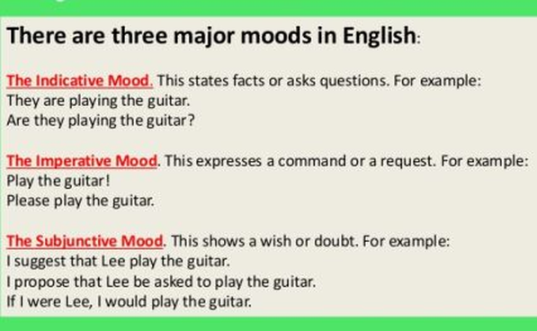
Recall now that there are three moods of verbs in English, mood being that aspect of the verb that expresses the speaker’s state of mind or attitude toward what he or she is saying. These moods are the indicative, the imperative, and the subjunctive. The indicative and imperative both deal with actions or states in factual or real-world situations; in contrast, the subjunctive deals with actions or states as possible, contingent, or conditional outcomes of a want, wish, preference, or uncertainty expressed by the speaker.
The most common and familiar of the three moods is, as we know, the indicative. It conveys the idea that an act or condition is (1) an objective fact, (2) an opinion, or (3) the subject of a question. Indicative statements seek to give the impression that the speaker is talking about real-world situations in a straightforward, truthful manner; their operative verbs take their normal inflections in all the tenses and they follow the subject-verb agreement rule religiously.
Now let’s closely examine the sentence in question when it uses the first answer choice: “He insisted that she stays in the house.” This sentence is perfectly grammatical when it is said or understood as an indicative statement, where the speaker declares in a persistent but straightforward and truthful manner what he believes is an objective fact: that the female referred to currently stays—that’s the verb “stay” taking its normal present-tense inflection—in that particular house.
That sentence is also perfectly grammatical when said or understood as an indicative statement when the verb in the “that”-clause is in the past tense: “He insisted that she stayed in the house.” Here, the speaker declares in a persistent but straightforward and truthful manner what he believes is an objective fact: that the female being referred to stayed for sometime—that’s the verb “stay” taking its normal past-tense inflection—in that particular house.
Finally, let’s closely examine the sentence in question when it uses the third answer choice: “He insisted that she stay in the house.” There’s now an apparent subject-verb disagreement in the “that”-clause between the singular “she” and the plural-form “stay.” However, if that sentence is said or understood to be subjunctive, it would be grammatically and semantically correct. Indeed, one of the uses of the subjunctive is to denote a speaker’s insistence that a particular action be taken, not that it’s true or factual.
So then, always keep in mind this rule for subjunctive sentences with a “demand,” “require,” or “insist” main clause followed by a “that”-clause indicating the action to be taken: the operative verb of that clause always takes the subjunctive plural present tense (without the suffix “-s”) whether the doer of the action is singular or plural: “I demand that all of you leave right now.” “The company requires that all job applicants take an IQ test.” And, in the same token, “He insisted that she stay in the house.”
I trust that I have adequately clarified this particular form of the subjunctive.
This essay first appeared in the weekly column “English Plain and Simple” by Jose A. Carillo in The Manila Times, April 11, 2015 issue © 2015 by Manila Times Publishing. All rights reserved.
(3rd of a 3-part series)
Last week, towards the end of my column about wormholes in certain Supreme Court rulings and correspondence, I said that the unnamed letter-writer who brought them to my attention asked this devilishly equivocal grammar question: “What should the verb be in this sentence: ‘He insisted that she (stay, stays or stayed) in the house’?”
I replied that the answer could be the subjunctive “stay,” the indicative present-tense “stays,” or the indicative past-tense “stayed.” Since the explanation would involve some grammatical complexities, however, I decided to devote a separate column to it.
Let me start by rearranging the answer choices for that sentence: “He insisted that she (stays or stayed, stay) in the house.” This will allow us to discuss the more familiar grammar concepts first and work our way to the more complicated ones.
Recall now that there are three moods of verbs in English, mood being that aspect of the verb that expresses the speaker’s state of mind or attitude toward what he or she is saying. These moods are the indicative, the imperative, and the subjunctive. The indicative and imperative both deal with actions or states in factual or real-world situations; in contrast, the subjunctive deals with actions or states as possible, contingent, or conditional outcomes of a want, wish, preference, or uncertainty expressed by the speaker.
The most common and familiar of the three moods is, as we know, the indicative. It conveys the idea that an act or condition is (1) an objective fact, (2) an opinion, or (3) the subject of a question. Indicative statements seek to give the impression that the speaker is talking about real-world situations in a straightforward, truthful manner; their operative verbs take their normal inflections in all the tenses and they follow the subject-verb agreement rule religiously.
Now let’s closely examine the sentence in question when it uses the first answer choice: “He insisted that she stays in the house.” This sentence is perfectly grammatical when it is said or understood as an indicative statement, where the speaker declares in a persistent but straightforward and truthful manner what he believes is an objective fact: that the female referred to currently stays—that’s the verb “stay” taking its normal present-tense inflection—in that particular house.
That sentence is also perfectly grammatical when said or understood as an indicative statement when the verb in the “that”-clause is in the past tense: “He insisted that she stayed in the house.” Here, the speaker declares in a persistent but straightforward and truthful manner what he believes is an objective fact: that the female being referred to stayed for sometime—that’s the verb “stay” taking its normal past-tense inflection—in that particular house.
Finally, let’s closely examine the sentence in question when it uses the third answer choice: “He insisted that she stay in the house.” There’s now an apparent subject-verb disagreement in the “that”-clause between the singular “she” and the plural-form “stay.” However, if that sentence is said or understood to be subjunctive, it would be grammatically and semantically correct. Indeed, one of the uses of the subjunctive is to denote a speaker’s insistence that a particular action be taken, not that it’s true or factual.
So then, always keep in mind this rule for subjunctive sentences with a “demand,” “require,” or “insist” main clause followed by a “that”-clause indicating the action to be taken: the operative verb of that clause always takes the subjunctive plural present tense (without the suffix “-s”) whether the doer of the action is singular or plural: “I demand that all of you leave right now.” “The company requires that all job applicants take an IQ test.” And, in the same token, “He insisted that she stay in the house.”
I trust that I have adequately clarified this particular form of the subjunctive.
This essay first appeared in the weekly column “English Plain and Simple” by Jose A. Carillo in The Manila Times, April 11, 2015 issue © 2015 by Manila Times Publishing. All rights reserved.
Jose Carillo/ Meditation on Our Digitized World: “The Tree of Life”
The Tree of Life
By Jose A. Carillo I have given it a lot of thought, and now I suspect that the original Tree of Knowledge in the Garden of Eden was not a living plant but a powerful computer. The Bible was surprisingly silent about the nature of that tree, so artists and writers through the ages had felt free to variously picture it as an apple tree, a fig tree, a pear tree, a dragon’s blood tree, even a banana tree. I understand that in a 13th century cathedral somewhere in France, there was even a fresco that showed Eve finding a serpent coiled around a giant branching European mushroom, the lightly toxic and hallucinogenic Amanita muscaria, drawn with Provencãl innocence to represent the tree that gave us our much-dreaded mortality. These images of the Tree of Knowledge are as charming as the Romans envisioning their messenger-god Mercury as a runner with winged feet, as frightening as the early Christians sketching the devil as a thoroughly beastly creature with serpent’s snout and bat wings, and as heavenly as the Renaissance artists conjuring archangels with majestic, blindingly white eagle’s wings.  All of this ancient imagery, however, miserably fails to capture the essence of a device or icon that is supposed to represent the most powerful source of wisdom and instruction the world has ever known. An apple tree, a banana tree, or a vine-like mushroom as the Tree of Knowledge? This seems to me to stretch the credulity of even a nine-year-old grade-schooler much too much! I would therefore rather think of the Tree of Knowledge as a Pentium 4 personal computer with a 56 kbps fax modem, hooked up by a powerful Internet server to the World Wide Web, capable of directly feeding on the 2.5 billion documents accessible to the Internet and of being able to sift through 520 billion more that are publicly accessible in other databases.* I could not think of any other compendium or structure, no matter how massive, that could draw on such a huge database and merit “Tree of Knowledge” as a sobriquet, much less make this database accessible to even the small populace of the Garden of Eden close to the time of Creation. Of course I realize that a myriad conceptual objections can be raised against this seemingly whimsical intellectual construct. Chief of these is the question of how the Pentium 4 and the Internet could have gotten themselves into the Garden of Eden in the first place. Could it be that they had managed to quietly transport themselves back in time and install themselves into the Tree of Knowledge, or else disguise themselves as the tree itself? Those fixated with time’s immutability would of course deem this too farfetched, as improbable as the tales of extraterrestrial visitations peddled by the Danish writer Erik von Daeniken. But it is at least not as preposterous a concept as a fruit tree being the source of all human understanding and wisdom. A tree as a source of life, yes, like our coconut with its proverbial one thousand and one uses, from food to shelter to medicine to fuel and to lumber; but just any tree as source of all knowledge, I really wonder. And what about the paradox that would result if we believed that the Tree of Knowledge drew its power from a state-of-the-art Pentium? Would that belief still hold if we consider the fact that the computer and the Web are actually the culmination of the series of small and big inventions that sprung from Adam and Eve having eaten the fruit from the Tree of Knowledge itself? Remember that the computer became possible only because somewhere early in time, man discovered and learned how to harness fire, then found a way centuries later to use it to melt the tiny particles of glass in sand into wafers of silicon, then developed a method for converting these wafers into transistor chips and into extremely powerful motherboards and processors that are the heart of the modern computer. Remember, too, that the Internet and the Web are of a much more recent vintage. It was only in 1973 that the Internet came into being, the happy result of American research into technologies to interlink computer networks of various kinds. Another 21 years into the future, in 1994, the British computer scientist Tim Berners-Lee invented the World Wide Web to unify and integrate the Internet’s global information and communication structure. Since then it has expanded into a global network of networks, enabling computers of all kinds—including yours and mine—to directly communicate and share services throughout much of our planet. What is perhaps little appreciated in this dizzying train of inventions is that the modern computer and the Web have been essentially a continuing but silent Hindu-Arabic-European-American co-production, and that at the root of it was the ancient Indo-European language and the Arabic number system. We know, of course, that these twin foundations of our civilization moved into Europe and jumped across the English Channel into England, polishing themselves into the English language and into the Arabic number system that we know so well today. It really is no wonder that Boolean algebra, a mathematical system of representing logical propositions that became the foundation for the modern computer, was developed by the English language expert and mathematician George Boole in the very same soil that produced the wonder of English literature that was William Shakespeare. The Chinese may have invented paper, the abacus, and gunpowder, and the Romans may have built their empire that extended all the way to Africa and to the banks of the Mesopotamian River in what is now modern Iraq, but I simply cannot conceive of the modern computer built from Chinese script or from the Roman numeral system, with which no stable building taller than the Roman Coliseum could be built because the system simply could not multiply and divide numbers properly. That the Tree of Knowledge could not have been a fruit tree but a computer linked to the Web may remain debatable, and I will not quibble with that fact. But to me, one thing is clear and certain: the computer and the Worldwide Web have made the Tree of Knowledge much more accessible and closer to us than ever before, and it would be a tragedy if not outright foolish for anyone not to learn to freely partake of its fruits. (2002) This essay first appeared in my English-usage column in The Manila Times in 2002 and subsequently formed part of my book English Plain and Simple: No-Nonsense Ways to Learn Today’s Global Language, © 2004 by Jose A. Carillo. Copyright 2008 by The Manila Times Publishing Corp. All rights reserved. ------- *Since this essay was written, of course, the Pentium 4 processor has since been supplanted in personal computers by much more advanced and powerful processors like the Core-Duo, and Google has grown even more explosively from 2,469,940,685 web pages in 2002 to over 30,000,000,000 today. It can thus be said that the computing machines and the online search engine capability that I had described glowingly in this 2002 essay are now obsolete. (A note in 2009) |
Jumat, 16 Desember 2016
soal remedial b inggris smkkp 2016
Kls X
1. Write down 3 dialogues about introducing ourselves, asking for help, and asking for thing
Kls XI
1. Write down a descriptive text in four paragraph
Kls XII
1. Write down 2 dialogues and a report text.
1. Write down 3 dialogues about introducing ourselves, asking for help, and asking for thing
Kls XI
1. Write down a descriptive text in four paragraph
Kls XII
1. Write down 2 dialogues and a report text.
Jumat, 06 Mei 2016
BBC English Learning Series 5
ws: 2; word-spacing: 0px; -webkit-textBig City Small World – Series 2 Episode 5
http://learnenglish.britishcouncil.org/en/big-city-small-world/series-2-episode-5-good-journalism
© The British Council, 2011 Page 1 of 4
The United Kingdom’s international organisation for educational opportunities and cultural relations. We are registered in England as a charity.
Series 2 Episode 5
Good Journalism?
Introduction
This support pack accompanies:
Big City Small World – Series 2 Episode 5
This support pack contains the following materials:
Before you listen
Audio script
Comprehension Task
2 Vocabulary Tasks
Grammar Task
Before you listen
We suggest you do the vocabulary activity below before you listen. Then listen to the episode and do the first task
to check your understanding. Finally, practise some vocabulary and grammar.
Match the words and phrases in the boxes to the definitions.
1. historic 2. exclusive 3. scoop 4. reveal
5. confidential 6. source 7. mention 8. worry
Definitions:
a. A big, important news story
b. Show, demonstrate
c. Refer to something or someone
d. Think negatively about future problems
e. Something famous or important in the past
f. The origin of something
g. Private
h. Only in one place
Bindyu has done something to save the cafe but is it the
right thing to do? Written by Chris Rose.
Big City Small World – Series 2 Episode 5
http://learnenglish.britishcouncil.org/en/big-city-small-world/series-2-episode-5-good-journalism
© The British Council, 2011 Page 2 of 4
The United Kingdom’s international organisation for educational opportunities and cultural relations. We are registered in England as a charity.
Audio script
Harry: “Campaign to save local shops”
Bindyu: Yes, they put my article on the front
page of the newspaper...
Harry: “Historic buildings threatened by new
development”
Bindyu: I feel like a real journalist now!
Olivia: It must make a change from writing about
interior design...
Bindyu: Oh yes...
Sarah: Let’s have a look...
Harry: Great photo as well – look, you can see
my banner on the front of the café!
Sarah: “We have discovered that Tony’s Café and
the shoe shop threatened with demolition
are actually historic buildings...” Erm, it
was really me and my friend who
discovered that, Bindyu, not you...
Bindyu: Yes, you’re right, but what’s important is
that now they can’t close the café!
Olivia: Or my shop....
Bindyu: Exactly!
Sarah: I guess you’re right... “We have found
exclusive information which shows that the
company building the new flats – who
want to demolish the historic buildings to
make more space – know they should not
demolish the buildings...” Hang on! The
building company already know! How did
you find that out?
Bindyu: It’s an exclusive! A scoop!
Sarah: But how did you find that information?
Bindyu: That’s a secret!
Olivia: Go on, tell us!
Bindyu: A good journalist never reveals her
sources!
Sarah: Go on, tell us!
Bindyu: Magda told me!
Magda: Hello everyone!
Olivia: Talk of the devil...
Magda: Sorry? Devil?
Olivia: Magda, I’m sorry... it’s just an expression...
Magda: What does it mean?
Olivia: If you’re talking about somebody, and then
they appear, you say: “Talk of the devil...”
Magda: Oh. I see. And why were you talking
about me?
Olivia: You gave some important information to
Bindyu...
Magda: Well, yes, it’s true. I did find out some
interesting information. It’s my new job – I
work for that company, you know...
Olivia: Yeah. I was surprised you found that
confidential information!
Magda: But I didn’t think you’d write about it,
Bindyu!
Bindyu: Don’t worry. I didn’t mention your name
anywhere! This is good journalism...
Magda: I guess so, but... if my employers find
out I gave information to you, I could be in
trouble! I might lose my job!
Olivia: Oh no...
Bindyu: Don’t worry Magda. No one will know, and
our campaign will be successful...
Magda: OK
Harry: Yeah – you watch – there’s no way they
can close the café now!
Olivia: I hope you’re right...
Sarah: Oh!
Magda: Wow!
Harry: Hey!
Olivia: Hi!!
Bindyu: Erm, who’s this?
All: Johnny!!!
Johnny: Hi!!!
Olivia: Welcome back!
Harry: Good to see you, man!
Johnny: Good to see you all again! I’m back!
Big City Small World – Series 2 Episode 5
http://learnenglish.britishcouncil.org/en/big-city-small-world/series-2-episode-5-good-journalism
© The British Council, 2011 Page 3 of 4
The United Kingdom’s international organisation for educational opportunities and cultural relations. We are registered in England as a charity.
Comprehension Task
True or false
Listen to the episode and decide whether these statements are true or false.
1. Bindyu’s article is on the front page of the newspaper.
2. Tony told Bindyu that the café was an historic building.
3. Harry helped Bindyu to write the article.
4. Olivia was surprised that Magda got information from her company.
5. Bindyu included Magda’s name in the article.6. Fadi has returned to the café after a long time.Vocabulary Task 1Gap fillComplete the sentences using the words in the box.1. Let’s have a ________!2. I ________ you’re right!3. I ________ you’re right!4. ________ of the devil!5. Go on, ________ us!6. What does it ________?7. Welcome ________!8. Good to see you ________!Vocabulary Task 2SpellingChoose the correct spellings.Option A Option B1 campaign campaing2 development developement3 actualy actually4 expresion expression5 reveal reveale6 really realy7 surprised suprised8 wellcome welcomeman hope back tellmean guess look talkBig City Small World – Series 2 Episode 5http://learnenglish.britishcouncil.org/en/big-city-small-world/series-2-episode-5-good-journalism© The British Council, 2011 Page 4 of 4The United Kingdom’s international organisation for educational opportunities and cultural relations. We are registered in England as a charity.Grammar TaskGap FillComplete the gaps in the summary with a, an, the or – (no article).Answers___________1 company that is building ___________2 new flats knowsthat ___________3 Tony’s Café and ___________4 shoe shop arehistoric buildings. Olivia and her friends want to stop ___________5company from knocking down ___________6 café and ___________7shop. Bindyu wrote ___________8 article for ___________9 localnewspaper about ___________1 0 situation. ___________1 1 newspaper___________1 2 article was printed on ___________1 3 front page.___________1 4 lots of people know what is happening now.
http://learnenglish.britishcouncil.org/en/big-city-small-world/series-2-episode-5-good-journalism
© The British Council, 2011 Page 1 of 4
The United Kingdom’s international organisation for educational opportunities and cultural relations. We are registered in England as a charity.
Series 2 Episode 5
Good Journalism?
Introduction
This support pack accompanies:
Big City Small World – Series 2 Episode 5
This support pack contains the following materials:
Before you listen
Audio script
Comprehension Task
2 Vocabulary Tasks
Grammar Task
Before you listen
We suggest you do the vocabulary activity below before you listen. Then listen to the episode and do the first task
to check your understanding. Finally, practise some vocabulary and grammar.
Match the words and phrases in the boxes to the definitions.
1. historic 2. exclusive 3. scoop 4. reveal
5. confidential 6. source 7. mention 8. worry
Definitions:
a. A big, important news story
b. Show, demonstrate
c. Refer to something or someone
d. Think negatively about future problems
e. Something famous or important in the past
f. The origin of something
g. Private
h. Only in one place
Bindyu has done something to save the cafe but is it the
right thing to do? Written by Chris Rose.
Big City Small World – Series 2 Episode 5
http://learnenglish.britishcouncil.org/en/big-city-small-world/series-2-episode-5-good-journalism
© The British Council, 2011 Page 2 of 4
The United Kingdom’s international organisation for educational opportunities and cultural relations. We are registered in England as a charity.
Audio script
Harry: “Campaign to save local shops”
Bindyu: Yes, they put my article on the front
page of the newspaper...
Harry: “Historic buildings threatened by new
development”
Bindyu: I feel like a real journalist now!
Olivia: It must make a change from writing about
interior design...
Bindyu: Oh yes...
Sarah: Let’s have a look...
Harry: Great photo as well – look, you can see
my banner on the front of the café!
Sarah: “We have discovered that Tony’s Café and
the shoe shop threatened with demolition
are actually historic buildings...” Erm, it
was really me and my friend who
discovered that, Bindyu, not you...
Bindyu: Yes, you’re right, but what’s important is
that now they can’t close the café!
Olivia: Or my shop....
Bindyu: Exactly!
Sarah: I guess you’re right... “We have found
exclusive information which shows that the
company building the new flats – who
want to demolish the historic buildings to
make more space – know they should not
demolish the buildings...” Hang on! The
building company already know! How did
you find that out?
Bindyu: It’s an exclusive! A scoop!
Sarah: But how did you find that information?
Bindyu: That’s a secret!
Olivia: Go on, tell us!
Bindyu: A good journalist never reveals her
sources!
Sarah: Go on, tell us!
Bindyu: Magda told me!
Magda: Hello everyone!
Olivia: Talk of the devil...
Magda: Sorry? Devil?
Olivia: Magda, I’m sorry... it’s just an expression...
Magda: What does it mean?
Olivia: If you’re talking about somebody, and then
they appear, you say: “Talk of the devil...”
Magda: Oh. I see. And why were you talking
about me?
Olivia: You gave some important information to
Bindyu...
Magda: Well, yes, it’s true. I did find out some
interesting information. It’s my new job – I
work for that company, you know...
Olivia: Yeah. I was surprised you found that
confidential information!
Magda: But I didn’t think you’d write about it,
Bindyu!
Bindyu: Don’t worry. I didn’t mention your name
anywhere! This is good journalism...
Magda: I guess so, but... if my employers find
out I gave information to you, I could be in
trouble! I might lose my job!
Olivia: Oh no...
Bindyu: Don’t worry Magda. No one will know, and
our campaign will be successful...
Magda: OK
Harry: Yeah – you watch – there’s no way they
can close the café now!
Olivia: I hope you’re right...
Sarah: Oh!
Magda: Wow!
Harry: Hey!
Olivia: Hi!!
Bindyu: Erm, who’s this?
All: Johnny!!!
Johnny: Hi!!!
Olivia: Welcome back!
Harry: Good to see you, man!
Johnny: Good to see you all again! I’m back!
Big City Small World – Series 2 Episode 5
http://learnenglish.britishcouncil.org/en/big-city-small-world/series-2-episode-5-good-journalism
© The British Council, 2011 Page 3 of 4
The United Kingdom’s international organisation for educational opportunities and cultural relations. We are registered in England as a charity.
Comprehension Task
True or false
Listen to the episode and decide whether these statements are true or false.
1. Bindyu’s article is on the front page of the newspaper.
2. Tony told Bindyu that the café was an historic building.
3. Harry helped Bindyu to write the article.
4. Olivia was surprised that Magda got information from her company.
5. Bindyu included Magda’s name in the article.6. Fadi has returned to the café after a long time.Vocabulary Task 1Gap fillComplete the sentences using the words in the box.1. Let’s have a ________!2. I ________ you’re right!3. I ________ you’re right!4. ________ of the devil!5. Go on, ________ us!6. What does it ________?7. Welcome ________!8. Good to see you ________!Vocabulary Task 2SpellingChoose the correct spellings.Option A Option B1 campaign campaing2 development developement3 actualy actually4 expresion expression5 reveal reveale6 really realy7 surprised suprised8 wellcome welcomeman hope back tellmean guess look talkBig City Small World – Series 2 Episode 5http://learnenglish.britishcouncil.org/en/big-city-small-world/series-2-episode-5-good-journalism© The British Council, 2011 Page 4 of 4The United Kingdom’s international organisation for educational opportunities and cultural relations. We are registered in England as a charity.Grammar TaskGap FillComplete the gaps in the summary with a, an, the or – (no article).Answers___________1 company that is building ___________2 new flats knowsthat ___________3 Tony’s Café and ___________4 shoe shop arehistoric buildings. Olivia and her friends want to stop ___________5company from knocking down ___________6 café and ___________7shop. Bindyu wrote ___________8 article for ___________9 localnewspaper about ___________1 0 situation. ___________1 1 newspaper___________1 2 article was printed on ___________1 3 front page.___________1 4 lots of people know what is happening now.
Langganan:
Postingan (Atom)